
ML.ai Platform
Load, resolve, sample, train, evaluate, and explain — a guided pipeline from data to decision.
From raw inspection data to a board-ready risk decision, ML.ai handles the whole pipeline — and shows its work at every step.
ML.ai is a browser-based machine learning & analytics environment — no installs, secure, one platform, many use cases. Load your data, frame the problem, train and evaluate models, and produce auditable results, all in one place.
It's designed for pipeline engineers, not data scientists. The hard parts — sampling, baking, validation, explainability — are handled for you, with sensible defaults you can override.
See it on your data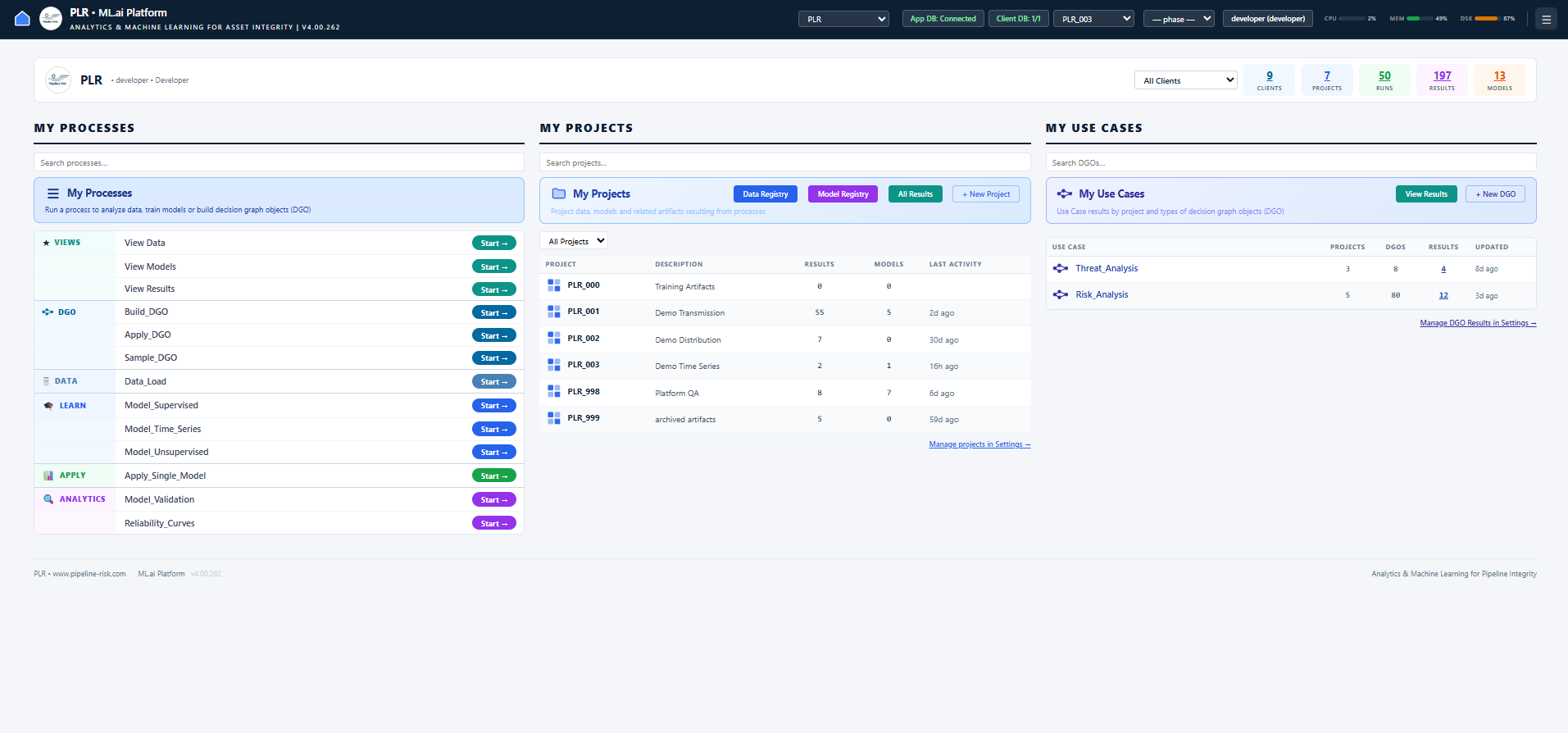
Load, resolve, sample, train, evaluate, and explain — a guided pipeline from data to decision.
PHMSA-compliant qualitative & quantitative risk analysis with transparent, defensible scoring.
40+ pre-built predictive models for the use cases integrity teams hit most often.
Low-cost geospatial data store that enriches every analysis with spatial context.
Bring in inspection and operational data; declare what you're predicting and which factors matter.
Train predictive models with built-in sampling, baking, and validation — no guesswork.
Every prediction broken down to its contributing factors, so the result is trusted and auditable.
Produce ranked, traceable outputs your team and regulators can act on with confidence.
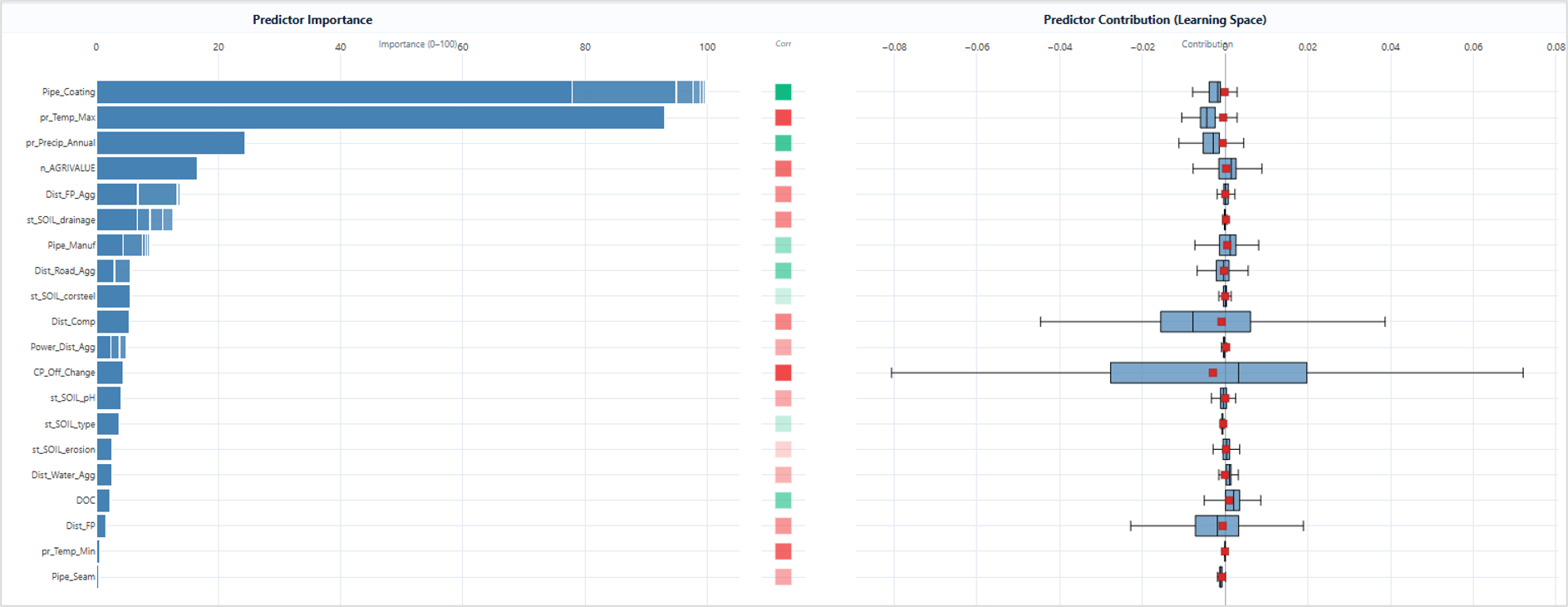
Every model in ML.ai is explainable. See exactly which factors drive each prediction, at the population level and for any individual record — the insight your engineers need to trust it and your auditors need to accept it.
See it in actionA single predictive model answers a single question. The Decision Graph Object (DGO) goes further: it's an AI-learned ontology — a living knowledge graph that captures how your assets, threats, data, and models actually relate.
Build it once, and it powers any integrity or risk management use case — inspection prioritization, compliance, threat analysis, direct assessments, remaining life — all from one connected, reusable, and fully explainable structure. It's how PLR turns scattered models and data into a system that reasons about your pipeline the way your best engineers do.
See the DGO in action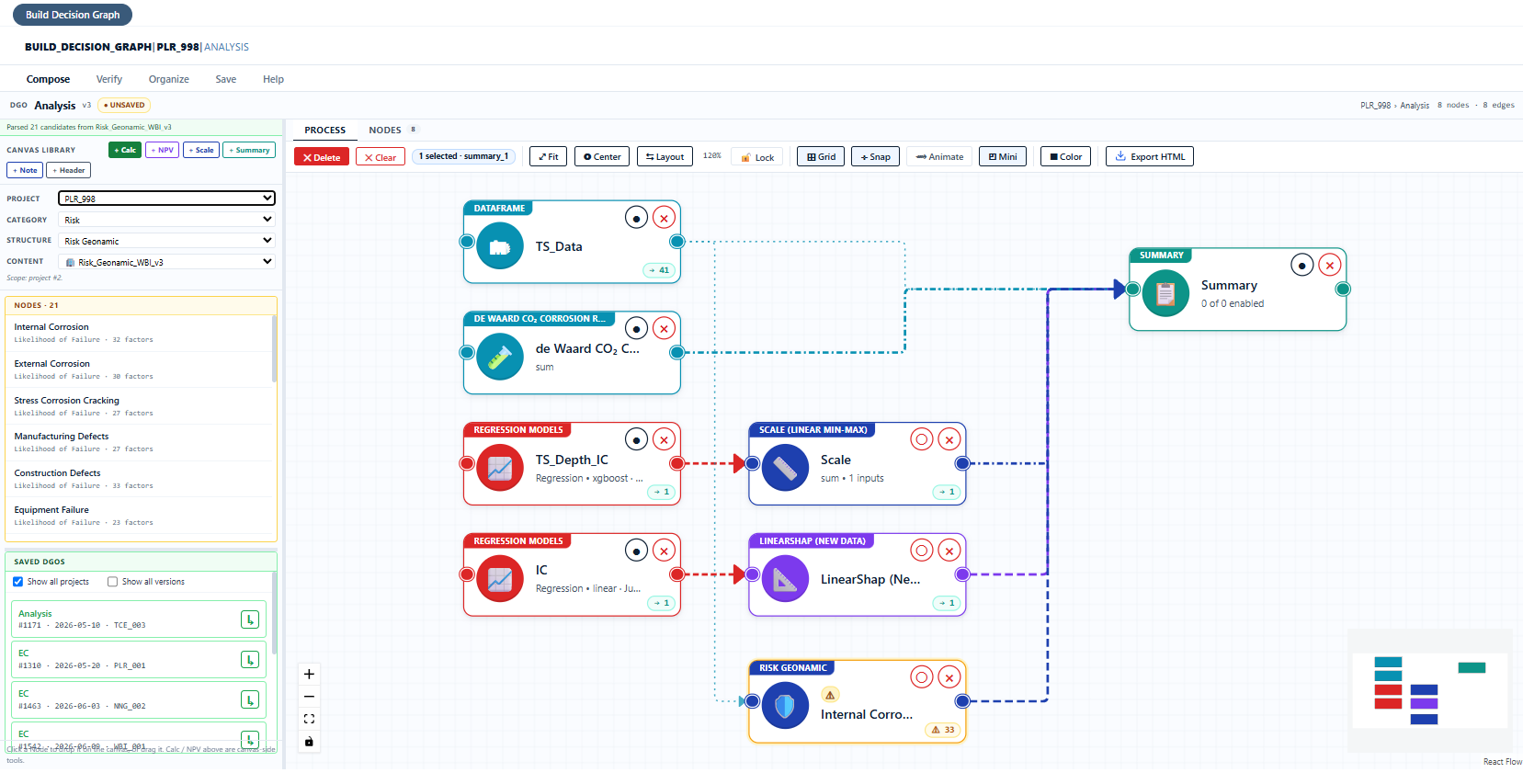
Book a short conversation and we'll walk you through a real use case.
Get started